Unlocking the Benefits of Pelvic Floor Physical Therapy
Key Takeaways
Pelvic floor physical therapy is a highly effective, non-surgical option for problems like leakage, pelvic pain, prolapse symptoms, and sexual dysfunction—and it works for both women and men.
Approximately 1 in 3 women and 1 in 5 men will experience a pelvic floor issue in their lifetime. These problems are common but not normal - just because you are "getting older" or "had kids" does not mean you have to live with them.
Therapy is gentle, respectful, and tailored to the individual. Many people notice meaningful improvement within 4-6 sessions when they follow a home program.
Pelvic floor muscles can be too weak or too tight, which means self-prescribed Kegels are not always the answer. A pelvic health physiotherapist can assess what your body actually needs.
Consider an assessment with a pelvic floor physical therapist as a proactive step toward confidence, comfort, and better bladder, bowel, and sexual health.
As a pelvic health physiotherapist, I spend my days helping people regain control over their bodies - often after years of quietly tolerating symptoms they assumed were “normal.” Whether it’s a new mom who leaks when she sneezes, a woman in perimenopause experiencing pain with intercourse, a man struggling with bladder control after prostate surgery, or an athlete dealing with chronic groin or hip pain, the story is often the same: they didn’t know help existed.
This guide is for anyone experiencing pelvic floor symptoms or interested in learning how pelvic floor physical therapy can improve their quality of life. Pelvic floor issues are common and significantly impact daily life, but effective, evidence-based treatments are available.
That’s exactly why I wanted to write this guide. Pelvic floor physical therapy remains one of the most underutilized - yet effective - treatments for many conditions that affect daily life, relationships, and overall well being. My goal is to make this information approachable, easy to understand, and hopefully give you the confidence to take that first step toward better pelvic health.

Understanding Your Pelvic Floor: The “Missing Link” in Core Strength
The pelvic floor consists of a group of muscles and connective tissues that support the pelvic organs (bowel, bladder, and uterus). It is essentially a hammock, or bowl of muscles that stretches from your pubic bone at the front to your tailbone at the back, and out to your sitting bones on each side. These muscles sit at the base of your pelvis, quietly doing their job every single day. Most people don’t know they even exist until they start having issues.
So what exactly do these pelvic floor muscles support? For people with a uterus, the pelvic floor is one of the structures that helps hold up the bladder, uterus, vagina, and rectum. For people with a prostate, it helps support the bladder, prostate, and rectum. These pelvic organs depend on your pelvic floor function to stay where they belong.
Here’s what most people don’t realize: the pelvic floor is also the foundation of your deep core system. It works together with your diaphragm (the breathing muscle), your transversus abdominis (the deepest abdominal layer), and the multifidi (your deep back muscles) to create stability and support for everything you do. Your pelvic floor muscles are just as important as your abs and glutes for everyday movement - whether you’re lifting groceries, running after your kids, lifting weights at the gym, or simply standing in line at the coffee shop.
A key concept that surprises many of my patients: the pelvic floor needs to be able to both contract AND relax. Contraction helps with holding in urine, gas, and stool, lifts the pelvic organs, activates the core, and plays a key role in orgasm Relaxation allows for comfortable bowel movements, pain-free sexual intercourse or tampon insertion, and proper emptying of the bladder. When muscles can’t do both jobs well, or contract and relax at the wrong time, that’s when pelvic floor dysfunction shows up.
And these pelvic floor issues don’t discriminate by age. I’ve worked with teens dealing with painful periods or constipation, postpartum parents a few months after delivery, post-menopausal women navigating changes in their bodies, and men recovering from prostate surgery. The pelvic region affects everyone.
The Four Core Jobs of the Pelvic Floor
Think of your pelvic floor as having four main responsibilities. Understanding these helps explain why pelvic floor dysfunction can look so different from person to person.
Support – Your pelvic floor helps hold your pelvic organs up against gravity. When the pelvic floor muscles are doing their job well , you don’t feel the sensation of “something falling out” when you stand or walk. When it’s struggling, you might notice pelvic pressure or heaviness, or feel/see a bulge down below. These are signs that the pelvic organs are sitting lower than they should, and that the pelvic floor muscles are not functioning optimally.
Sphincter – The pelvic floor muscles are responsible for the sphincters that control your bladder and bowel openings. Good sphincter function means you’re not leaking when you cough, sneeze, or jump. It also means when you feel the urge to go to the bathroom, you can confidently hold your urine or stool until you find a bathroom, and once there, you are able to fully empty your bowel or bladder without pain or the need to strain.
Sexual – The pelvic floor plays a direct role in arousal and orgasm. Healthy muscle function allows for comfortable penetration and contributes to pleasurable sensations. Pain, discomfort, and/or cramping during or after sex or orgasm has many causes, but pelvic floor muscle tension is an important contributing factor in most cases.
Stability – Working with the other 3 muscles of the core, the pelvic floor helps your spine and pelvis stay steady during movement. This is why people with pelvic floor weakness or tension sometimes experience low back pain or SI joint problems that don’t respond to traditional treatments.
Dysfunction in any of these four jobs can show up as a sensation of heaviness, dragging, bulging, leakage, urgency, pelvic pain, painful intercourse, pain with or difficulty achieving orgasm, or difficulty with bladder and bowel function. Assessing which jobs are struggling is exactly what allows a pelvic floor physical therapist to design a targeted personalized treatment plan.
Who Can Benefit from Pelvic Floor Physical Therapy?
Let me be clear from the start: pelvic floor physiotherapy is for all genders and ages. One of the most common things I hear from new patients is, “I wish I’d known about this 10 years ago.” You’re not alone if this is news to you
Research suggests that 1 in 3 women, and 1 in 5 men will experience pelvic floor dysfunction in their lifetime. Symptoms of pelvic floor dysfunction include issues such as leakage, constipation, urgency, painful periods, prolapse, or pain with sex. Many people experience these issues and are never told that pelvic health physiotherapyis an option. In many cases, these are treatable conditions, and you should never feel that experiencing them is a personal failing or something you “just have to live with.”
Women and people assigned female at birth commonly seek pelvic floor physiotherapy for incontinence (leakage), preparation for labour and delivery, pain during pregnancy, , bladder or bowel urges that are difficult to control, constipation, abdominal bloating, pelvic organ prolapse symptoms, period pain, endometriosis, interstitial cystitis, pain with tampon use or penetration, to prepare for/recover from hysterectomy, vaginismus, vulvodynia, and menopause-related changes affecting bladder control and sexual function.
Men and people assigned male at birth benefit from treatment for urinary leakage after prostate surgery, chronic prostatitis or chronic pelvic pain syndrome (CPPS), testicular, perineal, or bladder pain, erectile dysfunction, constipation, and incomplete bladder or bowel emptying.
Postpartum individuals - whether after vaginal or C-section delivery - often experience abdominal separation (diastasis recti), leakage, pelvic pressure, tailbone pain, and painf with intercourse in the first year after delivery and beyond. Postpartum recovery is about more than just “bouncing back,” it’s about restoring muscle function and rehabilitating the biomechanical changes that happened during pregnancy and birth so that you feel strong and confident in your body again
High-impact athletes (runners, weightlifters, CrossFit enthusiasts) and people who do heavy manual work may leak with effort or feel pelvic pressure due to repeated loading of the pelvic floor. Many of these individuals often complain of chronic piriformis, groin, low back, or hip pain/tension, which is often a sign of a pelvic floor that is either too tight, or lacking in coordination.
If you see yourself in any of these examples, please know that these symptoms are signals, not life sentences. Appropriate treatment exists, and seeking help is a sign of strength, not weakness.

Five Key Benefits of Pelvic Floor Physical Therapy
Now let’s talk about what you’re really here for: the practical, day-to-day benefits of pelvic floor physical therapy. These are the changes that matter most to the people I work with.
Benefits often start appearing within a few weeks of consistent work, but deeper changes in pelvic floor strength and coordination typically take 8–12 weeks. Patience and consistency with your home program makes a real difference.
Better bladder control is often the number one reason people seek pelvic floor rehabilitation. Stress urinary incontinence - those leaks with coughing, sneezing, laughing, or jumping - responds remarkably well to targeted pelvic floor muscle training. Research shows that supervised training can lead to significant improvement in most cases within 12 weeks. Urgency incontinence (racing to the toilet, going “just in case” all day) also improves with training, as does nighttime bathroom frequency. Better bladder control means you have the freedom to socialize and exercise without constantly mapping out restroom locations.
Improved bowel function is another major benefit that doesn’t get talked about enough. Pelvic floor therapy can help with constipation, straining, incomplete emptying, fecal incontinence, fecal smearing, and difficulty passing gas without accidents. Here’s something important: sometimes the issue isn’t pelvic floor muscle weakness, it’s muscle tightness preventing proper relaxation. Learning to relax the pelvic floor for comfortable bowel movements is just as crucial as strengthening. Many urinary and bowel control issues share common root causes, and addressing both through pelvic health physiotherapy can transform your quality of life.
Reduced pelvic pain is possible for many conditions that seem mysterious or untreatable. Pelvic health physiotherapy can address painful sex (dyspareunia), pain with orgasm, vulvodynia, vestibulodynia, pudendal neuralgia, chronic prostatitis/CPPS, endometriosis-related muscular pain, tailbone pain, and bladder pain. For people with chronic pelvic pain related to pelvic floor muscle tension, manual therapy and relaxation techniques can provide relief that medications alone often can’t achieve.
Decreased prolapse symptoms is another area where pelvic floor PT shines. Physiotherapy can significantly decrease sensations of heaviness and bulging, and 12-16 weeks of supervised pelvic floor muscle training has been shown to reduce the severity of prolapse by one full stage, and reduce symptoms by up to 50%. In most cases of mild to moderate prolapse, pelvic health physiotherapy is the first-line treatment, not surgery. Physiotherapy aims to improve the strength, endurance, and coordination of the pelvic floor muscles, in addition to teaching strategies for lifting, exercise, and bowel habits that reduce downward pressure on the pelvic organs. . For mild to moderate prolapse, many people find they can manage symptoms well with conservative physiotherapy treatment.
Improved sexual function is a benefit many patients are shy to ask about, but it matters deeply. Reducing pelvic floor muscle tension can lead to more comfortable penetration, improved arousal and orgasm, and reduced cramping/discomfort after sex. For people with sexual dysfunction related to muscle tension or weakness, targeted treatment addresses the root cause rather than just masking symptoms. For individuals with a history of sexual trauma, it can help you reconnect and stay present during intimacy. Therapy always respects your boundaries and comfort - you are always in control of what gets addressed and when.
What to Expect at Your First Pelvic Floor PT Visit
I know the idea of seeing a pelvic floor physiotherapist can feel intimidating. Let me walk you through exactly what happens so you know what to expect. Privacy, consent, and choice are emphasized at every stage. I always say, “you’re my boss, I work for you - so anything you don’t want to answer, or don’t want to do, you don’t have to.”
Step 1 – Conversation: Your first visit starts with a detailed history-taking. I’ll ask about bladder habits, bowel patterns, sexual health, pregnancies, surgeries, pain, exercise routines, and your medical history. This conversation helps me understand your symptoms in context. Nothing has to be discussed or examined if you’re not ready - you will be encouraged to set the boundaries and pace of the conversation.
Step 2 – External assessment (optional): Next, I may ask to examine your posture, breathing patterns, hip and back mobility/strength,and abdominal wall tension/strength (including any scar tissue from C-section, hysterectomy, or abdominal surgeries). Gentle palpation around the pelvis helps identify areas of muscle tension, weakness, or tenderness. This physical exam is done with your comfort in mind, and with the mindset of rehabilitating issues that may be contributing to your symptoms
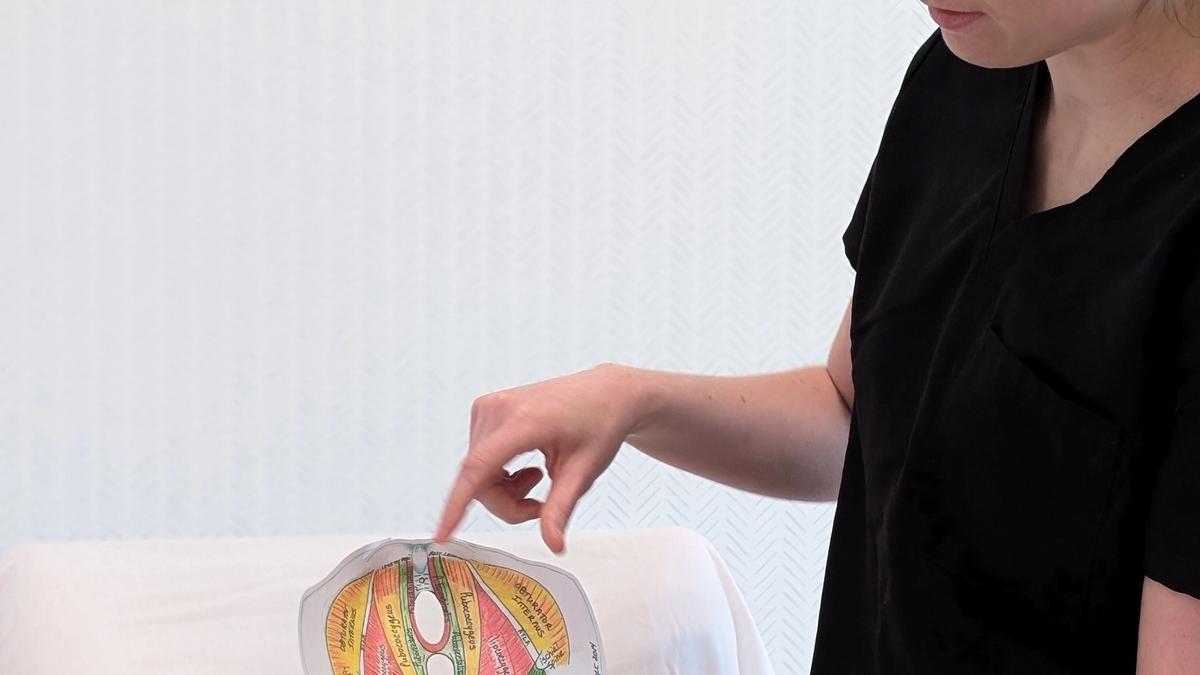
Step 3 – Internal exam (optional): Next, I’ll talk you through what to expect during a pelvic exam so you can decide if this is something you are interested in. For this exam, you will be lying on your back, propped up with a wedge under your torso and pillow under your head. You will be covered by a sheet and a blanket, with your legs supported by a bolster under each knee (no stirrups here!), offered a heat pad for comfort, and a pelvic model to assist with your understanding of the assessment. All pelvic exams are approached in a graded manner, so at any point if you feel uncomfortable, you have the option of withdrawing consent: the groin muscles are assessed first, followed by palpation of the external pelvic floor muscles. A visual inspection of the skin will then be offered, and then you will be asked to try contracting/relaxing your pelvic floor (if you don’t know how, it’s my job to teach you!). Next you may be asked to cough, cough while contracting your pelvic floor, and bear down so I can assess how your pelvic floor is handling pressure, and the position of your pelvic organs. You may then be offered a one-gloved-finger vaginal and/or rectal exam. The purpose of this internal assessment is to check pelvic floor strength, endurance, coordination, muscle tension, scar tissue, and trigger points. It provides valuable information that external assessment alone can’t capture. However, this can absolutely be declined, postponed, or built up to over several sessions - it’s never required to begin treatment. Many effective exercises and strategies can be started without an internal exam.
Step 4 – Education: After the assessment, I’ll explain findings in plain language, often using diagrams or models. We’ll connect your symptoms (like leakage or pain) to what was observed in your muscles, movement patterns, and joints. Understanding what’s happening in your body is empowering—it turns a mysterious problem into something concrete you can work on.
Step 5 – Plan of care: Most people leave their first session with 2–4 specific exercises for their home program, lifestyle tips (fluid timing, bowel habits, breath work, body mechanics), and a clear idea of the expected timeline. For many individuals, 4-6 appointments booked 2 weeks apart, and adherence to their home program results in meaningful change. All treatment plans are individualized and adjusted to your goals, capacity, and budget. All exercises/advice will be administered via paper handout in the clinic, or with a follow-up email after your appointment.
You are welcome to bring a support person with you to the appointment, ask for a chaperone, or request accommodations that will make you feel more comfortable during your time at the clinic . All discussions remain confidential.
Common Treatment Tools: More Than Just Kegels
Effective pelvic floor physiotherapy usually involves a blend of hands-on techniques, exercise, lifestyle changes, and education. Kegel exercises are only one small piece of the puzzle, and sometimes they’re not used at all. If you have a hypertonic (too-tight) pelvic floor, doing more Kegels can actually make things worse.
Manual therapy: Involves gentle internal and external techniques to release trigger points, soften tight tissue, mobilize scars (e.g., C-section, hysterectomy, episiotomy, perineal tears, or prostatectomy incisions), and improve blood flow and nerve mobility. For people with pelvic pain or muscle tightness, manual therapy is often the foundation of treatment and typically targets the muscles of the back, abdomen, hips, groin, and/or pelvic floor These techniques help restore normal muscle function and alleviate symptoms.
Customized exercise programs: May include:
Strengthening exercises for weak or underactive hip, core, or pelvic floor muscles
Relaxation, mobility, and stretching exercises for tight or overactive back, hip, abdominal, groin, or pelvic floor muscles
Diaphragmatic breathing exercises
Strategies to assist with nervous system regulation
Graded return to impact exercise like running or jumping
Supervised exercise and adherence to a home program, can transform muscle tone and coordination in 8–12 weeks.
Biofeedback: allows real-time feedback for individuals who struggle to “find” the right muscles or who tend to over-clench.
Other tools: can include electrical stimulation (which activates muscles or helps with pain relief), vaginal dilators (for vaginismus or pain with penetration), pelvic wands, TENS machines, pessaries, etc. Each tool is explained thoroughly before use.
Treatment Tool | Best For | Key Consideration |
|---|---|---|
Manual Therapy | Pain, tightness, scars | Requires trained therapist |
Strengthening Exercises | Weak pelvic floor muscles | Proper form is critical |
Relaxation Training | Overactive/tight muscles | Often overlooked but essential |
Biofeedback | Muscle awareness, coordination | Visual feedback helps learning |
Electrical Stimulation | Muscle activation, pain | Not standalone treatment |
Dilators | Vaginismus, painful penetration | Gradual progression needed |
A word of caution: Self-directed Kegels, home pelvic trainers, “Kegel chairs” that promise 10,000 contractions, or “vaginal weights” can worsen symptoms if your pelvic floor is already too tight or poorly coordinated. An assessment is the safest way to know what your body needs before starting any program.
Self-Care vs. Professional Help: When You Need a Pelvic Health Physio
The internet is full of pelvic floor advice—apps, influencers, devices promising miracle results. It can be hard to know what’s truly safe and evidence-based.
When self-care may be reasonable to try:
Very mild leaks with big laughs only
Occasional urgency without pain
Early postpartum gentle reconnection with your core
General awareness of breathing and posture
Red flags that mean it’s time to see a pelvic floor physio or doctor:
Persistent leakage that affects daily life
Pelvic heaviness, bulging, or visible tissue at the vaginal or anal opening
Pain with sex or insertion (tampons, fingers, penetration)
Chronic pelvic pain or testicular pain
Recurrent UTIs
Blood in urine or stool
Sudden changes after surgery or childbirth
Fecal incontinence or difficulty with bowel control
Doing the “wrong” exercises—for example, intense Kegels for someone with an overactive pelvic floor—can increase pain, frequency, urgency, and difficulty emptying. This is why individualized guidance from a pelvic floor physical therapist matters so much. What helps one person may harm another.
Before your first appointment, you will be sent an intake form that prompts you to write down your symptoms, list your medications, disclose things you would like considered during treatment (e.g., history of trauma), and any questions you may have. It is my job to make you feel as comfortable as possible when talking about these difficult topics, and it is your job to be as honest as possible so we can work together to create a realistic plan that fits your life, and gets your back towards feeling like yourself again.
Taking the Next Step: Finding and Working with a Pelvic Floor PT
If you’ve read this far and recognized yourself in any of these descriptions, I encourage you not to delay care. Clinical experience and research consistently show better outcomes with earlier intervention. But it’s also never “too late” to improve—I’ve helped patients in their 70s and 80s make meaningful gains in their pelvic health.
How to find a qualified provider:
Look for a licensed physical therapist (or physiotherapist) with post-graduate pelvic health training
Ask about experience treating conditions similar to yours
Inquire about their approach to rehabilitation, consent and patient comfort
Questions to ask a potential physio:
What’s your experience working with individuals similar to my condition??
What does a typical course of care look like?
How do you involve patients in goal setting?
What if I’m not comfortable with internal assessment?
What genders do you treat?
The therapeutic relationship should feel safe, respectful, and collaborative. You should feel able to say “no,” ask for breaks, or change the plan if something feels uncomfortable. Due to the intimate nature of pelvic health physiotherapy, your emotional comfort and physical health are of the utmost importance.

Here’s what I want you to take away from everything we’ve discussed: pelvic floor physiotherapy is about giving you back control over your body. It’s about being able to laugh, lift, run, work, socialize, enjoy intimacy, and travel without constantly worrying about your pelvis. It’s about teaching you to maintain and care for your pelvic health long-term, so that you can age with dignity, strength, and grace.
Optimal pelvic health isn’t a luxury—it’s a foundation for various bodily functions and overall well being. You deserve to feel confident and comfortable. A pelvic floor physical therapist can help you address pelvic floor dysfunction, support pelvic health, and create lasting change.
The benefits of pelvic floor therapy extend far beyond just “stopping leaks.” They include restored confidence, better sexual health, improved women’s health and men’s health outcomes, and the freedom to live without limitation. Taking that first step—booking an assessment—is often the hardest part. But it’s also the most important.
Your pelvic floor has been working hard for you your whole life. Now it’s time to give it the attention it deserves.
Frequently Asked Questions
Is pelvic floor physical therapy only for women who have had babies?
Absolutely not. While many postpartum individuals seek pelvic floor physiotherapy, people of all genders and life stages benefit from seeing a pelvic PT. I work with teens dealing with painful periods or constipation, women who have never been pregnant with bladder pain, perimenopausal and post-menopausal women, men dealing with prostate issues, bladder problems, or bowel dysfunction, and individuals living with connective tissue disorders like hypermobility spectrum disorder or the Ehlers Danlos Syndromes. Pelvic floor dysfunction r can develop in anyone, at any age for many reasons - not just during pregnancy or after childbirth.
Will I have to have an internal (vaginal or rectal) exam?
Internal assessment provides valuable information about pelvic floor strength, coordination, tension, and trigger points, but it is always optional. Many effective treatments can begin with education, external assessment, movement testing, and exercise prescription. Consent can be withdrawn at any point without impacting your right to care. A good pelvic floor physiotherapist will never pressure you—your comfort guides the process.
How long does it usually take to see results?
Many people notice improvement in urgency, leakage, or muscle awareness within 2–3 sessions. However, meaningful gains in strength, endurance, and coordination typically take 8–12 weeks of consistent therapy and home exercises. Chronic pain conditions or complex pelvic health issues, like endometriosis, interstitial cystitis, or vulvodynia, may require a longer, more gradual approach. Your pelvic health physiotherapist will discuss the anticipated timeline for you to notice results at your first appointment.
Is pelvic floor physical therapy covered by insurance?
In Nova Scotia, pelvic health PT is billed like standard physiotherapy and is often covered by insurance. Pelvic health physiotherapy is more expensive than regular physiotherapy due to the advanced training/education it requires, one-on-one nature of appointments (no kinesiologist or PTA’s here!), and length of appointments (45-60 minutes). While much advocacy work has been done by the Canadian Physiotherapy Association with the insurance companies to increase reimbursement rates for this highly specialized area of physiotherapy, some individuals still have substantial out-of-pocket costs. I recommend checking with your insurer about coverage, the need for physician referral, visit limits, and co-pays prior to starting treatment.Don’t let uncertainty about cost stop you from at least inquiring about treatment - many clinics can help you navigate this.
What if I feel embarrassed talking about bladder, bowel, or sexual problems?
This is perhaps the most common concern I hear, and I want to reassure you: pelvic health physios talk about these topics every single day. Nothing is “too weird” or “too embarrassing” to mention. Being open about your symptoms—whether it’s leakage during sexual intercourse, difficulty with bowel movements, or any other concern—allows the therapist to tailor care precisely to your needs. Many people quietly tolerate symptoms for years that could have been addressed much sooner. You deserve that chance.
Ready to Strengthen your Pelvic Floor?
Amy Yorke PT is ready to work with you.